
Notes from Seoul: Why Korea Stopped Being a Crypto Story

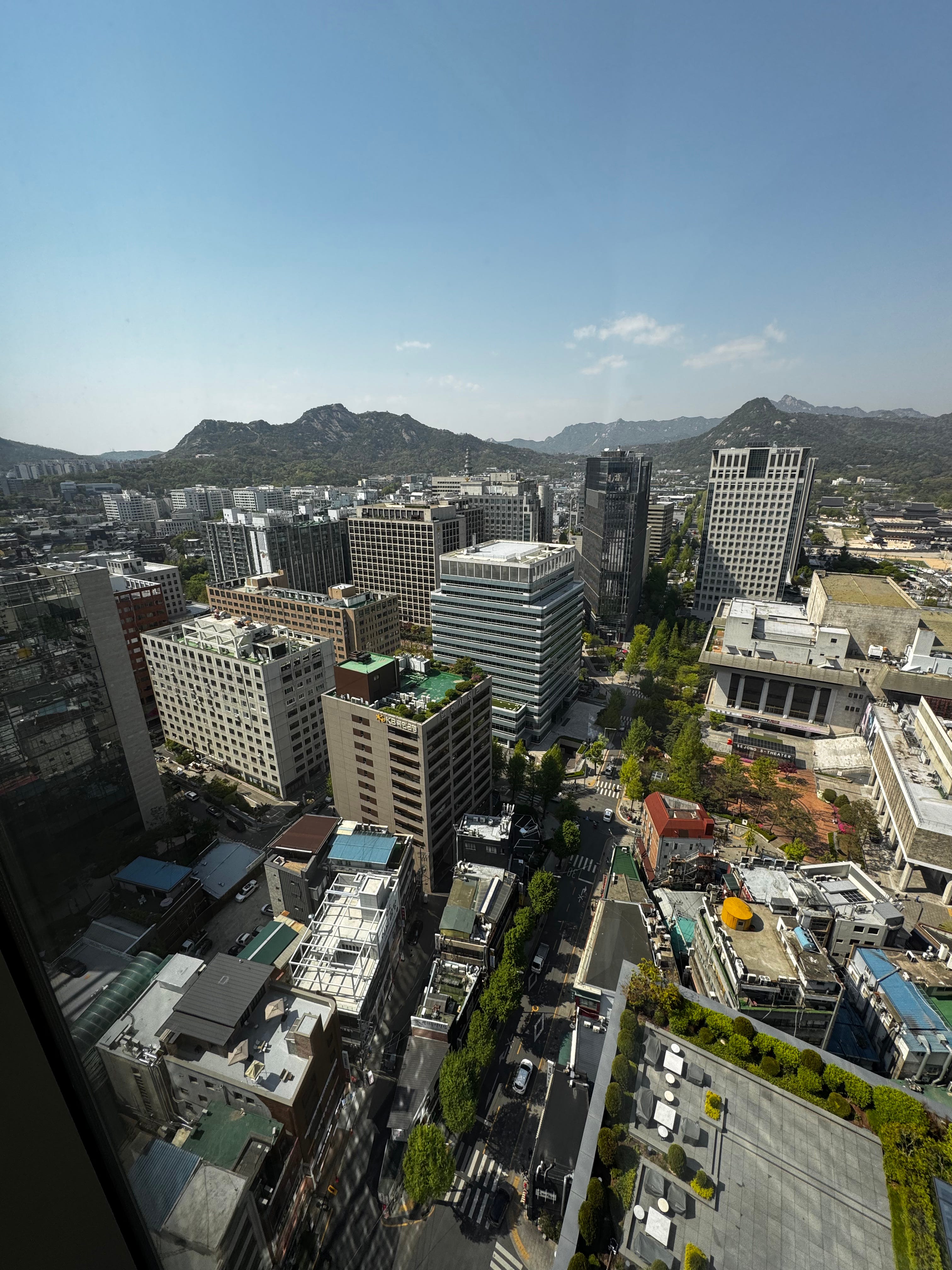
I’ve been spending some time in Seoul this year and the thing you notice first is that crypto here is not a subculture. In most cities I’ve lived in or visited, you can go weeks without anyone bringing it up unless you’re at a specific meetup or a specific office. In Seoul it leaks into normal conversation. The taxi driver asks what I do, I say crypto, and he mentions he used to trade XRP on Upbit. The bartender has an opinion on the Kimchi Premium. A friend’s mother, mid-sixties, casually mentions she holds some ETH because her son set it up for her.
And yet the market I walked into is not the market I expected. The headlines from the last cycle trained everyone to think of Korea as pure retail chaos, the Kimchi Premium, Upbit as a casino, and that version of Korea is fading in a way that has very little to do with crypto itself. The real story is happening one screen over.
The capital rotated, and it’s not coming back fast
If you only look at crypto charts, you miss most of what’s actually going on. The KOSPI started 2025 around 2,400 and crossed 6,300 in February 2026, and as I’m writing this it just printed 7,844, a new all-time high reached after the combined market cap of the KOSPI and KOSDAQ blew past 7,000 trillion won in early May. Morgan Stanley has a year-end ceiling of 9,500 to 10,000 in their bullish scenario. Korea is in the middle of an equity bull run that makes the 2021 crypto cycle look like a warmup.
The engine is semiconductors. Samsung Electronics crossed a one trillion dollar market cap, and SK hynix overtook Eli Lilly to become a top fifteen company globally, with its forward PE actually surpassing Samsung Electronics for the first time ever in May, a structural reversal of the long-running “Samsung premium.” Together the two stocks now make up more than 42% of the entire KOSPI, which means the whole index is essentially an HBM and AI infrastructure bet wearing a country flag.
The story extends well beyond chips. Shipbuilding, defense, and power equipment have been running their own rotation rallies on the side, with HD Hyundai Heavy Industries posting double digit moves in single sessions, and Hanwha Aerospace, LIG Defense & Aerospace, and LS Electric all hitting new highs. Hyundai Motor ran for weeks on a “physical AI” narrative tied to robotics and autonomous vehicles. Korea now has eleven “emperor stocks” trading above one million won per share, up from ten the month before, and the broader pattern is a country rerate: Korea is repositioning in global investor minds as the second leg of the AI infrastructure trade, complementing the chip designer story in the US and the foundry story in Taiwan with the memory, manufacturing equipment, power, shipping, and defense layers that backstop the whole supply chain.
Wall Street hedge funds and US retail are flowing back into the KOSPI specifically to play this, and the domestic side reflects it just as clearly, with investor deposits hitting a record 137 trillion won and margin loan balances passing 36 trillion. This is what Korean retail is doing with the money that used to go into altcoins.
The retail crypto market is tired, and now we know why
You can’t analyze Korean crypto retail without holding this context next to it. Trading volumes on Upbit are down, new user growth has slowed, and the gap between crypto volume and equity turnover has widened sharply since early 2026. The standard Tiger Research framing is that retail is exhausted, which is true but undersells the mechanism.
Korean retail didn’t get bored so much as it found better options. When the local index doubles in a year on a real industrial thesis, and Samsung Electronics retail shareholders alone number 4.6 million, the marginal speculative dollar has a much more attractive home than a 30th-tier altcoin on Bithumb, and the Kimchi Premium has compressed to fractions of a percent on BTC and ETH as the mania has rotated out. When you talk to Korean traders in Seoul, the word that keeps coming up, translated loosely, is fatigue, but underneath the fatigue is the more honest version: the equity market is paying out and the crypto market isn’t.
The retail machine itself is intact. There are still weeks when 14 altcoins spike simultaneously on Upbit and Bithumb in a clearly coordinated flow, and XRP still does over $120 million a day across the two exchanges. What’s changed is that this is no longer the only game in town, and it matters globally because the Korean retail engine used to be a meaningful share of altcoin liquidity worldwide. When Korea was pumping, global markets felt it, and right now Korea is busy buying SK hynix and Hanwha Aerospace, which means a lot of small cap liquidity is quietly evaporating somewhere in the background.
The culture is stranger than the narrative
What surprises you on the ground is how differently crypto sits inside Korean culture compared to the Western framing. In the US, crypto has this libertarian backbone, a distrust of institutions, a cypherpunk origin story people still invoke even when they’re building for BlackRock, and none of that texture really exists here.
Korean crypto culture is shaped by two things that have nothing to do with ideology. The first is a deep consumer appetite for new digital products. Korea was one of the first countries to go fully mobile, one of the biggest markets for ChatGPT in Asia, and ranked among the top globally for Claude usage per capita, and when something new shows up, Koreans try it and spend money on it. Crypto was just another new digital product to test, and the public engaged with it the same way they engage with everything else, by adopting fast and figuring out the implications later.
The second is a structural frustration with domestic wealth building. Real estate is absurdly expensive, especially in Seoul, and the “Korea Discount” on equities was a real conversation for years. For a lot of younger Koreans, crypto was the only asset class where the ladder wasn’t already pulled up, which creates a very different relationship with risk than the Western framing suggests. The trading isn’t degen energy looking for an outlet, it’s closer to a recognition that this is the only table they can sit at.
The interesting part is that the second frame is now being challenged by the equity rally. If the KOSPI keeps running and the Korea Discount narrative actually inverts into a Korea Premium, the structural reason crypto attracted retail capital weakens, even though the cultural openness to new digital products stays exactly where it was. You see the same dynamic in the academies, where working professionals and university students gather to study crypto together with no formal credentials involved, just to make sense of the space. I haven’t seen anything quite like it anywhere else, and it emerged because the formal financial system didn’t give the public a channel to engage. Now the formal system is finally building one.
Where the fintech layer fits
The Korean fintech stack is unusually consolidated and unusually capable, which is the part of the picture I underestimated before arriving. Toss has 30 million users and integrated licenses across banking, securities, and payments. Kakao Pay processed 145.9 billion won in financial services revenue in Q1 alone, up 82% year over year, with custodial assets at Kakao Pay Securities growing 208% on the equity boom. Naver Pay did 24.2 trillion won in Q1 payment volume and is on pace to cross 100 trillion this year, and Korea’s daily simple payments average over 1.1 trillion won across all platforms combined.
Every one of these companies is now positioning around stablecoins. Toss, Kakao Bank, Kookmin Bank, an eight-bank consortium, and the Naver Financial and Dunamu merger (shareholder vote May 22) are all running parallel strategies for a KRW-pegged stablecoin, and the market is being projected at 20 trillion won within three years. Some context for why everyone is moving at once: in Q1 of 2025, roughly $40 billion leaked out of Korean crypto exchanges into foreign dollar stablecoins, and the entire policy fight in Seoul is essentially about how to keep that capital onshore.
The fight itself is well known by now. The Bank of Korea wants banks to hold at least 51% of any issuer, the FSC says that kills fintech innovation, and the disagreement has stalled the Digital Asset Basic Act for a year. What gets less attention is that the pilots are already live underneath the policy debate, with major banks running stablecoin settlement tests tied to the BOK’s CBDC project, Korea Exchange publicly committing to launching crypto ETFs and 24/7 trading, general corporations expected to be allowed to open crypto accounts in 2026, and a March 2026 law capping major shareholder stakes at 20% for exchanges, which forces structural change at Upbit and Bithumb whether the founders like it or not.
The way to read all of this together is that Korea’s tech and fintech giants are not waiting for the law, they are positioning to be the rails when it lands, and the rails they need don’t exist yet at institutional scale. Custody is thin, validator selection frameworks barely exist for Korean institutions, and compliance tooling is being built in real time on top of business that’s already moving. That gap is where the actual opportunity sits, in the infrastructure layer that lets a Korean bank or fintech execute a stablecoin or staking or RWA strategy without rebuilding the stack in-house every time.
What I’m taking home
A few things I keep coming back to.
Korea is no longer a crypto retail growth market, it’s a transition market, and the transition is being pulled by a once-in-a-generation equity bull run that has reset where speculative capital lives. Anyone still treating the country as a retail playground for altcoin liquidity is solving the wrong problem.
The country rerate matters more than the regulatory fight. The KOSPI doubling, SK hynix passing Eli Lilly, Samsung crossing a trillion dollars, foreign capital flowing back through ETFs and direct equity, and the fintech giants positioning for stablecoins are all happening on the same balance sheet, and crypto policy is downstream of where Korean capital wants to sit, not the other way around.
The institutional turn is real but non-linear. The Digital Asset Basic Act will keep slipping, the BOK and FSC fight will continue, but the pilots are live, the banks are positioning, and the infrastructure demand is forming well ahead of the law. Anyone waiting for the legislation to pass before talking to Korean institutions will be late by the time they show up.
Culture matters more than the narrative admits. The version of Korean crypto that lives in global headlines, the Kimchi Premium and Upbit chaos and altcoin mania, is a cartoon of a more interesting market that has a deep consumer base, a specific relationship with risk shaped by domestic wealth constraints, and a public that adopts new technology faster than almost anywhere else. None of that disappears when retail trading volume dips, it just looks for new vehicles, and right now those vehicles happen to be listed on the KOSPI.
Being here long enough breaks the lazy frame. Korea is not the altcoin casino anymore, it’s a market in structural transition with a retail base that found better trades, institutions that are cautiously moving, fintech giants racing to own the next settlement layer, and a culture that quietly continues to adopt faster than almost anywhere else in the world. The teams that map the transition first will define what comes next here, and the ones still working from the old playbook will spend the cycle pitching into a market that already moved on.
It is quite interesting to study the deeper effects of culture on capital markets. We are observing a gradual shift in capital allocation from crypto to equities as the Korean crypto market matures.